By: Ahmed Shamoukh
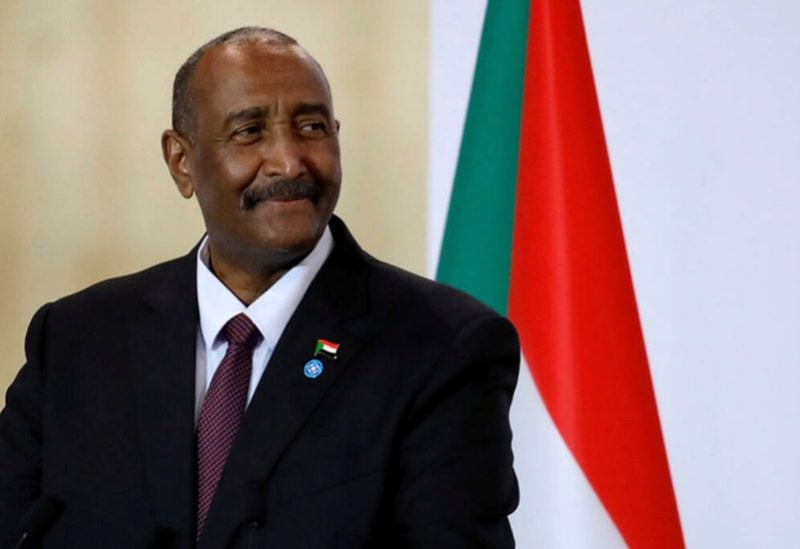
Yesterday’s speech by the Chairman of the Sovereignty Council was the most comprehensive and clear since the war erupted. It marked a new political and diplomatic phase in Sudan’s struggle for dignity, sovereignty, and unity, and in its battle to liberate all of its land from the UAE-backed Janjaweed project.
This speech is considered the most important since the failure of the “Janjaqahat” coup on April 11, 2023. That coup followed the army’s rejection of Emirati-imposed ceilings within the framework agreement, proposed through the Rapid Support Forces (RSF) and the Forces of Freedom and Change (FFC). These proposals aimed at dismantling the army — the shield of the state and nation — and reengineering state institutions to align with Abu Dhabi’s ambitions of dominance and control.
Abu Dhabi’s authorities did not delay their response to Al-Burhan’s speech, which countered their military and political escalation. They sought to deflect the heat of Al-Burhan’s accusations away from their territory by bringing out the terrorist Hemedti to announce a one-sided ceasefire. This was an obvious attempt to embarrass the Sudanese government and shift the international media narrative from “UAE’s involvement in supporting genocide in Sudan” to “the army refuses a ceasefire.” Their propaganda machine — from paid politicians to media figures — will likely push this narrative, despite U.S. Secretary of State Antony Blinken’s earlier dismissal of such attempts as doomed, stating that the Janjaweed militia is incapable of honoring any ceasefire.
Then came the reaction of Reem Al Hashimy, Minister of State in Abu Dhabi’s government, who attacked Al-Burhan’s statements and accused him of refusing a ceasefire and demanded sanctions against him — even though he had merely called for a clear framework that addresses Sudan’s security, sovereignty, and humanitarian concerns. Any ceasefire that bypasses those concerns would effectively amount to a declaration of Sudan’s partition and surrender to Abu Dhabi’s militias and aggression.
In the same context, Musaad Boulos — whom Al-Burhan described as “speaking on behalf of the UAE” — met with UAE Foreign Minister Abdullah bin Zayed in a clear attempt to contain the growing international political and media campaign exposing Abu Dhabi’s colonial and aggressive role in Sudan. The UAE’s strategy has been to push for a ceasefire narrative while avoiding scrutiny over its unfit position in the “Quartet” mediators group, considering its role as an aggressor. The meeting marked Abdullah bin Zayed’s first public appearance in the Sudan file in more than two years, during which time the UAE’s subversive intervention had been overseen by Shakhboot. This underscores how Al-Burhan’s speech hit a nerve in Abu Dhabi’s political establishment.
For the first time, Al-Burhan was explicit in rejecting the UAE’s presence within the Quartet, as its funding, support, and protection of the Janjaweed make it a direct party to the conflict — not a neutral mediator. This was the third time Sudan’s head of state made a clear statement against the UAE’s destructive role, a long-overdue clarity that should increasingly influence political decision-making.
Al-Burhan clearly stated that Abu Dhabi’s authority cannot be a mediator while it is the aggressor. This message aligns with what U.S. Secretary of State Rubio hinted at when he rejected the idea of the Quartet becoming a front behind which parties fueling the war could hide — in response to a question about the UAE’s role following his meeting with the Saudi Foreign Minister in Canada. Al-Burhan’s clarity brings the conversation back to the root causes of the crisis, rather than getting lost in details used to obscure the real perpetuator of the war.
The speech helped restore a significant degree of domestic and international confidence, something Sudan desperately needs to strengthen ties with allies and break Abu Dhabi’s attempts to isolate it politically, militarily, and in the media. Breaking free from the UAE’s hegemony is a strategic necessity that grants Sudan greater room to maneuver regionally. Domestically, the speech resonated with popular and institutional awareness that this is an existential war for Sudan — not a mere power struggle between two generals. It reframes the battle in its proper strategic context.
The speech also highlighted the role played by the Saudi Crown Prince in conveying Sudan’s plight to the U.S. President, further illustrating the division within the Quartet. The members do not share a unified vision of the war in Sudan: while Abu Dhabi seeks to maintain the RSF as a political and military counterforce to the state — a proxy for its ambitions — the Sudanese government firmly rejects this path. It sees it as part of the UAE’s colonial ambition to impose influence through political tools after its military aggression failed to achieve that goal.
The polarization within the U.S. administration regarding Sudan remains clear. While Boulos, aligned with Abu Dhabi’s agenda, pressures the Sudanese government to halt operations without offering any path to preserving Sudan’s unity, Secretary Rubio’s position appears more cautious — as shown in his statements after the G7 summit in Canada. He particularly warned against falling into the trap of the “individual misconduct” narrative used by Abu Dhabi to whitewash Janjaweed crimes — such as in the “Abu Lulu arrest” spectacle.
Despite the speech’s strength, it doesn’t necessarily indicate an imminent military escalation. The operations to liberate Kordofan and Darfur are ongoing. More likely, Sudan is heading into a sharper political and diplomatic phase, especially after the Turkish president announced that Sudan had asked Turkey to participate in ceasefire efforts.
To speak of a ceasefire without addressing the military presence of the RSF — which violated the Jeddah Agreement, occupied cities, displaced residents, and looted their properties — and without halting the UAE’s continuous military support with advanced weapons and mercenaries, is to legitimize partition and establish a parallel authority that Abu Dhabi is trying to impose at the expense of the Sudanese state. It also ignores the implications this has on the security and stability of the Red Sea, the Sahel, and the Horn of Africa, especially with the alarming proliferation of weapons and mercenaries fueled by Abu Dhabi’s war on Sudan — a situation now threatening the stability of countries like Mali, Burkina Faso, and even extending into Nigeria.